War on diabetes newsletter 25th January 2026
Welcome to the sixteenth War on Diabetes newsletter - regular tips and ideas from someone who has had diabetes for six years and learned a lot about it. It's a practical and actionable guide to details that your doctor probably won't have time to tell you about.
Happy New Year, and I hope you've had a great Christmas break. I've taken a bit of time to reflect on the difficulties the festive season brings to my type 2 diabetes journey. I get easily frustrated when progress starts going in the wrong direction but I've learned to accept that winter is generally going to be a period of levelling out and the goal for me should be to keep things in check without becoming an antisocial recluse. The hardest thing to deal with is the feeling that you have to justify not eating certain things whilst not coming across as some kind of militant dietary fanatic - I genuinely don't care if you want to eat cake and pizza - I just can't do that and "No, it really does not bother me at all". It's difficult because over 60 years of standard dietary advice has been to recommend 45-65% of calories to come from carbohydrates and for someone struggling with insulin resistance, this is going to keep glucose and insulin levels chronically elevated with the associated long-term health damage. The food environment we all live in has normalised bread, rice, potatoes, pasta or other large portions of carbohydrates being seen as a required accompaniment to every meal. Breaking free of that cultural conditioning is psychologically exhausting.
Progress Update
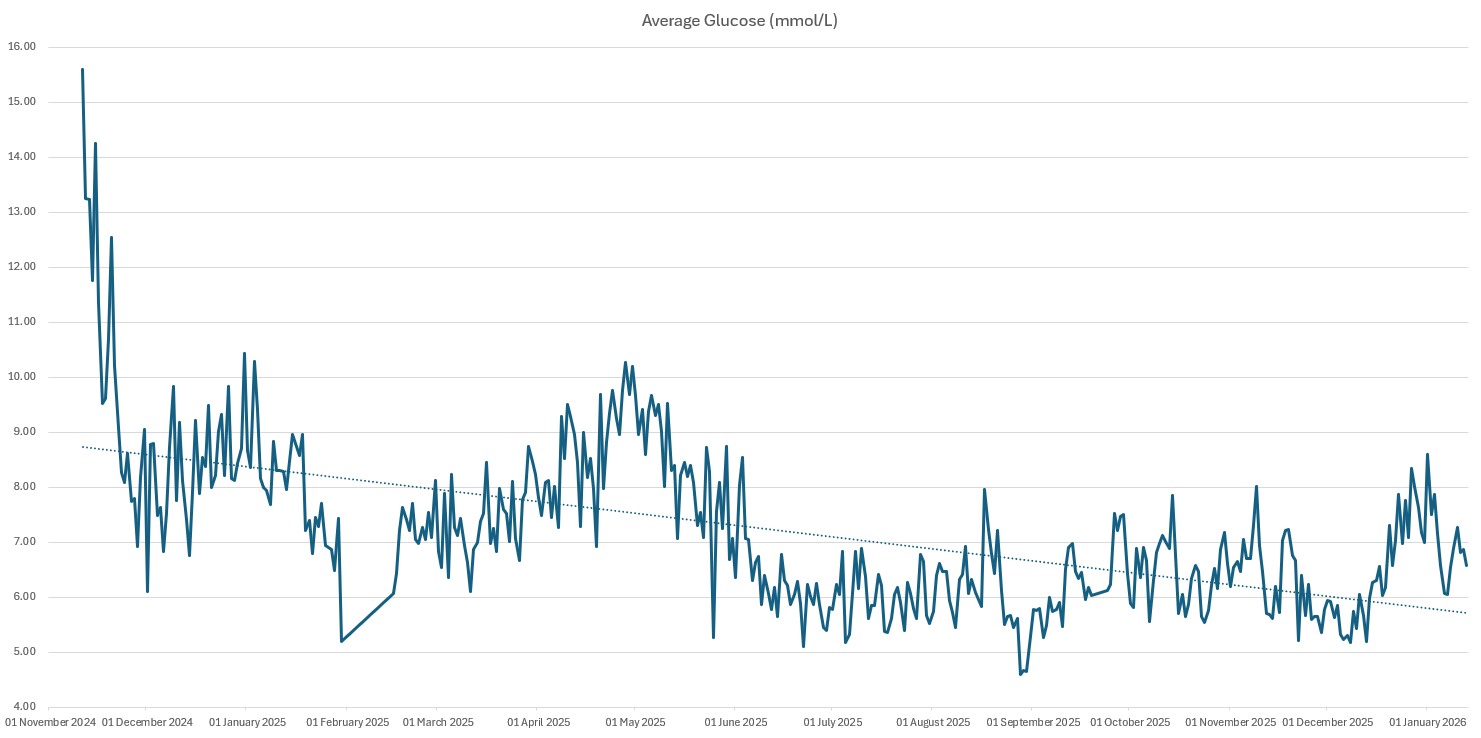
I was determined not to fall into bad habits too soon in December and the first couple of weeks went well. I'd got my 7-day average blood glucose down to 5.3 mmol/L (I'm usually happy if it's under 6.0). Then about five social events in total, with lots of booze and pies, took me up to 7.6. I haven't been that high since I started monitoring it in June 2025, so it's been a case of learning to accept that the Christmas period will be a setback and to be prepared to get back to good habits as soon as possible. I have done pretty well in getting that back down to 5.6. Too much alcohol leads to bad food decisions later on when mince pies and pizza are floating about.
I've found walking more difficult during the winter months and I've been doing my best to get at least two walks per day in, but some days have just been a complete washout so I'm learning to be patient and am really looking forward to spring and being able to get back to my usual three walks a day among the trees and hills. I've kept up my gym routine and the treadmill has helped me keep up a decent 15-minute power walk three times a week.

I've eased off the one day a week fasting due to thyroid problems and waiting to see if my next blood test shows up a reduction in antibodies before going back to that. I'm currently working on following a more ketogenic diet to try to get my glucose back in range, so aiming for 22g net carbs per day. This is an ambitious target but it's helping me get to 30-50g per day whereas my previous target of 50g was ending up with me hitting around 90g per day. My aim is to develop metabolic flexibility to give my body a rest from high levels of glucose burning which I'm hoping will aid the reversal of type 2 diabetes. I'm in remission but I can tell I'm not back to 'normal' yet.
My goal for 2026 is to get my HbA1c down from 38 to 35 mmol/mol by the end of summer. I'm in for the long haul now and I want to get to optimal, not just the high end of non-diabetic. I want to aim for sustainable progress over the coming decades rather than hit low levels and then burn myself out. It's always easy to give up and bury your head in the sand. If you're feeling like that now then please don't give yourself a hard time, just take some time to think about one new positive habit to introduce to help you get started.
All the best for 2026!
What to eat
I follow a lot of online communities discussing diabetes and I always feel for the people saying they've just been diagnosed and don't know where to start. It's a complicated condition and there is a lot of conflicting information out there. It becomes even more overwhelming when that is combined with, what is in my opinion, some bad advice from medical professionals who haven't updated their thinking since memorising textbooks at university. I've put together a demonstrably effective and extensive guide on what to eat and drink based on real-world experience following six years of trying different approaches. I also highlight some of the outdated dogmas that still permeate the debate.
Read moreExciting developments in the US
I'm quite astonished that the US government is now taking a lead in debunking some of the saturated-fat-o-phobia dogma that has been a contributor to the rise of metabolic disorders and increased heart disease risk since the 1960s. They've finally acknowledged that their cobbled together food pyramid was upside down 🙄 The TLDR of this debate is that if you're struggling with obesity and/or type 2 diabetes then a high carbohydrate diet will increase insulin, which increases insulin resistance and makes you store fat instead of burning it. They still haven't removed their restriction of 10% of daily calories from saturated fat so it looks like they've finally got the visual right but not bothered to update the text. One thing I have learned is to not take dietary advice from any government, especially the US.
Read more about the dodgy links of the sugar industry to biased researchFood Devils
Pies and pasties
I generally avoid savoury pastries as my CGM usually goes straight up to the danger zone when I go near them but I indulged in a few festive treats which I need to review for next year. I'd anticipated a couple of mince pie treats but ended up finding a few more lying around. We also ended up with some left over pies and pasties from family get-togethers where I'd forgotten to get them out. I think what I've learned is that more planning is needed and to write a list of things not to forget when hosting over the festive season.

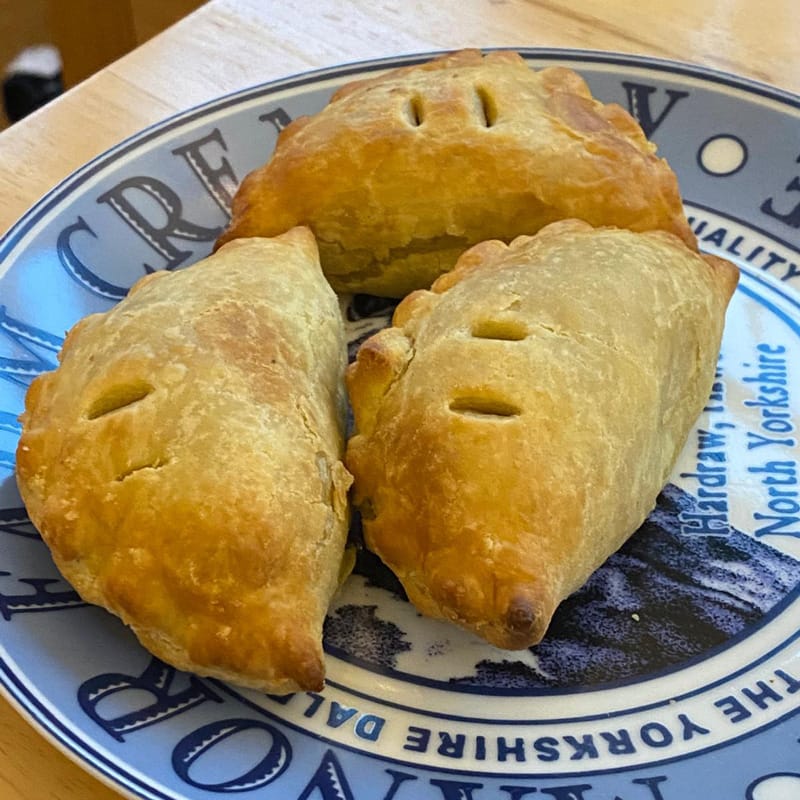
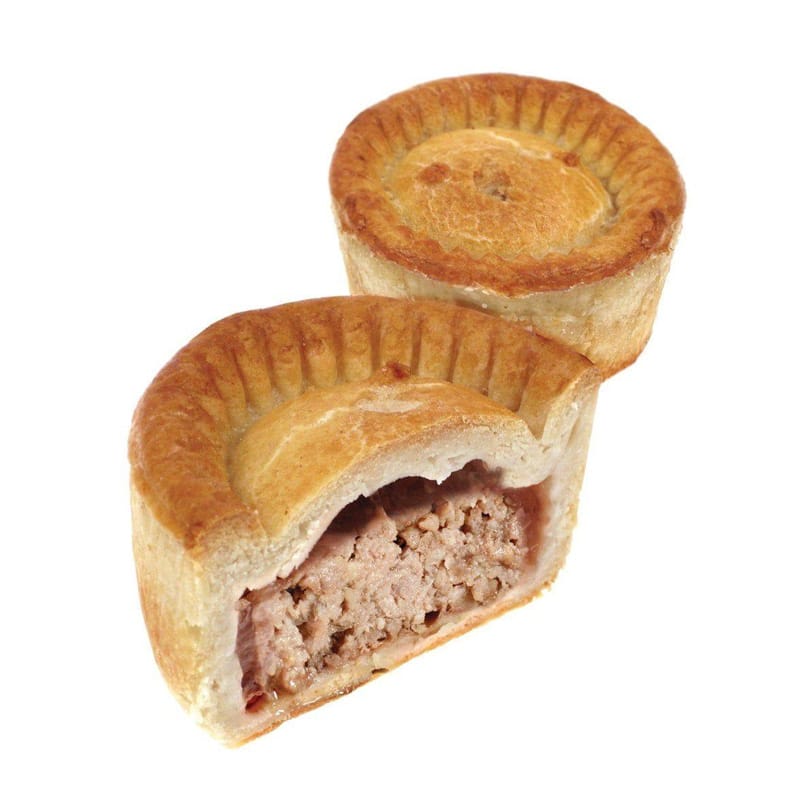
I love having brandy cream with mince pies which is about 11% sugar but at least there's a lot of fat to counteract that. Mini pasties turned up and whist pies are a traditional Bolton festive treat - they're like a small pork pie but made with beef and have to be served lip-meltingly hot.
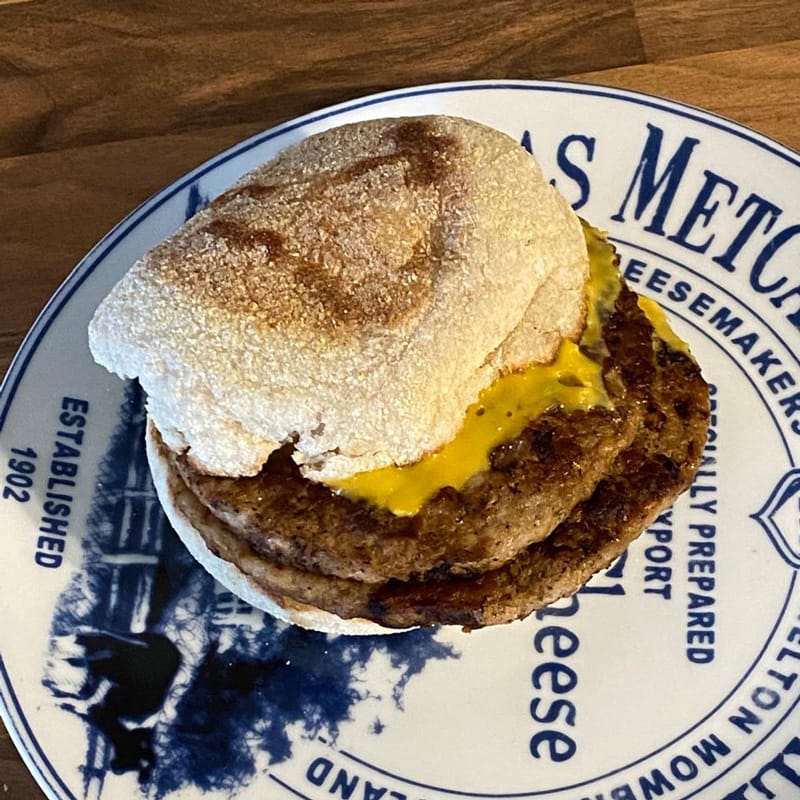
Double sausage & Egg McMuffin
One morning, I was a bit hungover and gave in to the offer of a McDonald's delivery breakfast. I don't know what they put in the bread but this thing is a massive glucose bomb. I have a better response to a Burger King Double Whopper with cheese when I'm having an occasional lazy moment. This took me from 8 to 12 mmol/L which is about the same as two pints of lager.
Salted peanuts
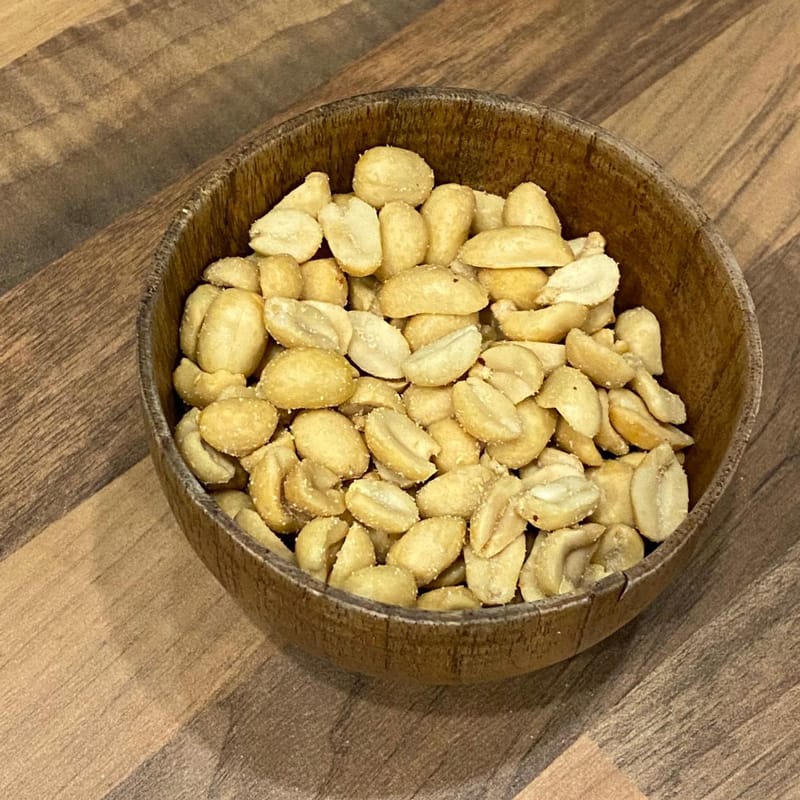
I've previously claimed these are one of the safer pub beer munchies snack options and they're not too bad if you're having a small packet, but peanuts are technically legumes rather than nuts and this means that they're moderately high in carbohydrates. As I've finally managed to convince everyone to stop buying me chocolates, cakes and sweets as Christmas gifts I've ended up with huge pots of salted peanuts which get snaffled by the bowl full once I've had a couple too many wines.
Food Heroes
Ham & Egg Salad
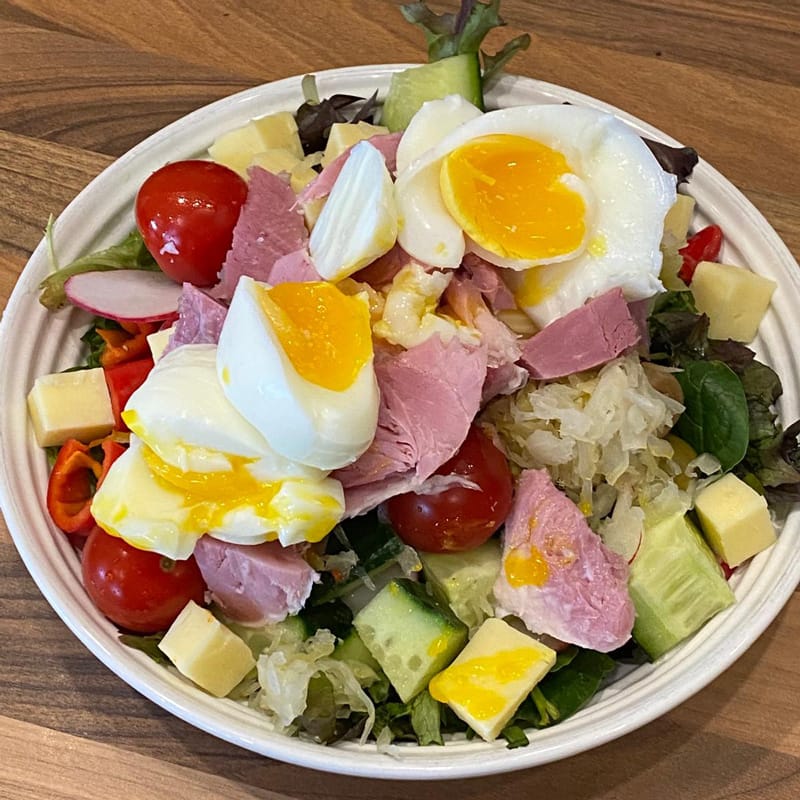
I love prepping a good salad when time allows. For me there has to be a real variety of things other than just lettuce to make it satisfying. This barely registered a bump on my CGM and I'd dropped another couple of mmol/L by dinner time. I don't trust ham in tins or sliced supermarket offerings so I usually get a ham hock joint from the butchers and roast it in the oven the day before planning to use any of it. I find the smell of hot ham a bit off-putting but it's delicious when served fridge-cold. It will last for a week and is good for an easy reach option from the fridge if munchies set in or you want a quick and easy meal. Adding water to the roasting dish and covering with foil helps to keep the meat juicy while cooking. Carve off the rind and roast that dry in the oven afterwards for crispy pork scratchings. Personally, I'm not keen on them but they pack in a lot of collagen and the high fat and protein content makes them a good snacking option.
Roast chicken soup
Roast dinners are always a good option for glucose control. It's best to avoid mashed potatoes, Yorkshire puddings and unpredictable pub-gravy. When making a roast chicken dinner at home I usually separate the remaining flesh into a container and keep the carcass ready to make chicken stock the next day. It takes a few hours to simmer down to a good stock but it's not a lot of work if you're at home for most of the day. I don't waste too much time skimming and separating everything - I just strain it all through a muslin cloth over a large bowl. A good tip for this is to use an elastic band to keep the muslin cloth in place and be slow but determined when tipping the hot liquid in to avoid spilling all over the worktop. Adding some left over roast potatoes is much better than bread and cooling and reheating them helps to build resistant starch which will have a lower glucose impact than the first time around.
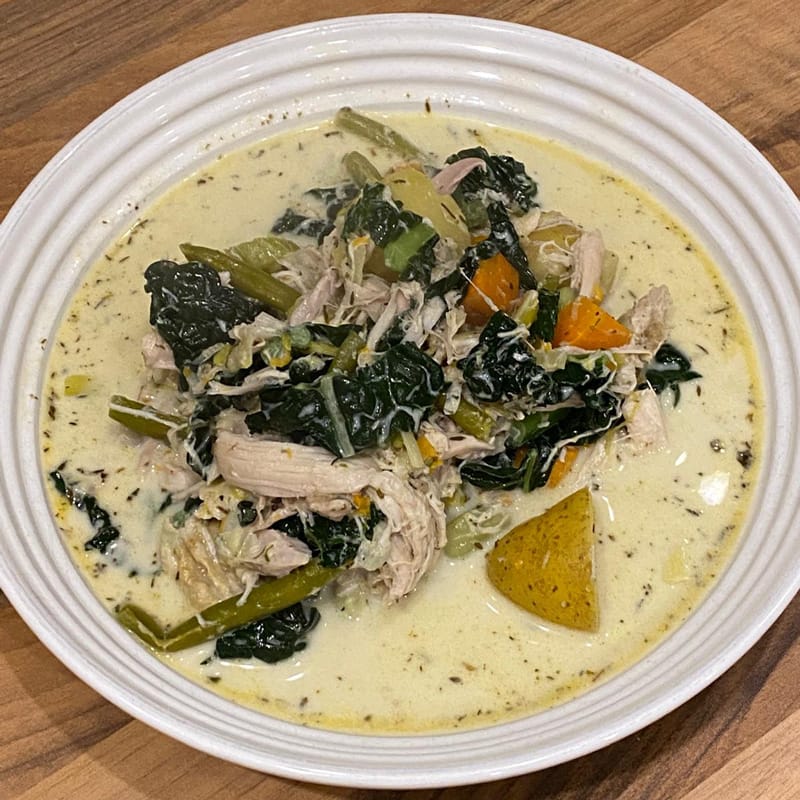
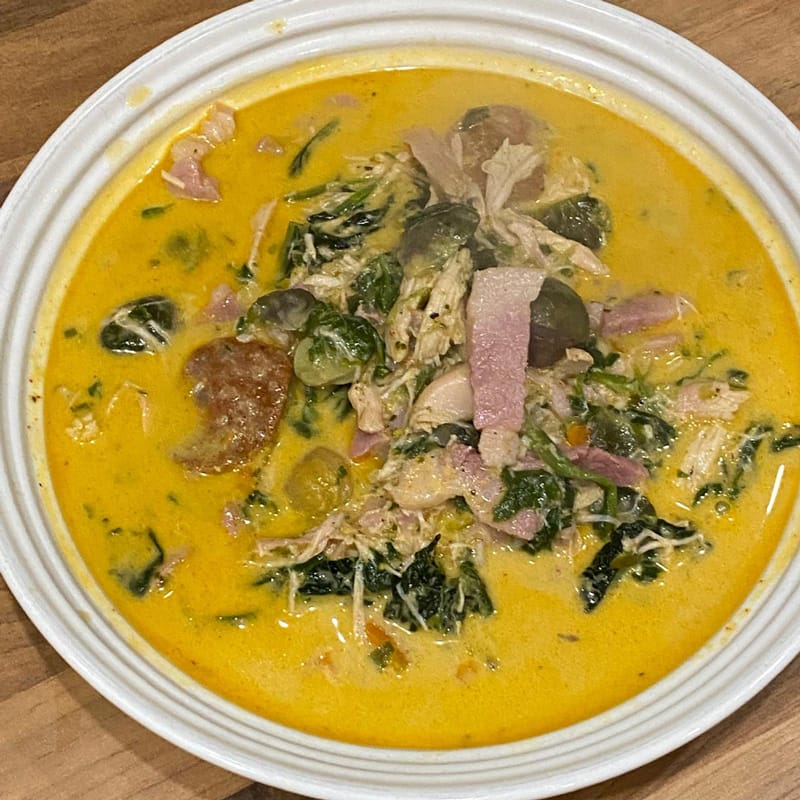

Cavolo nero is more enjoyable than tough and chewy kale. I usually end up with two lots of meals left from the stock for two people. Pre-frying some chorizo and bacon before adding the stock and veggies helps to mix it up a bit. I'm not normally this cheffy with adding the fresh sage but I had some left over from a family Christmas dinner. You want those sparkling silky fat globules - full of flavour and will fill you up without resorting to bread.
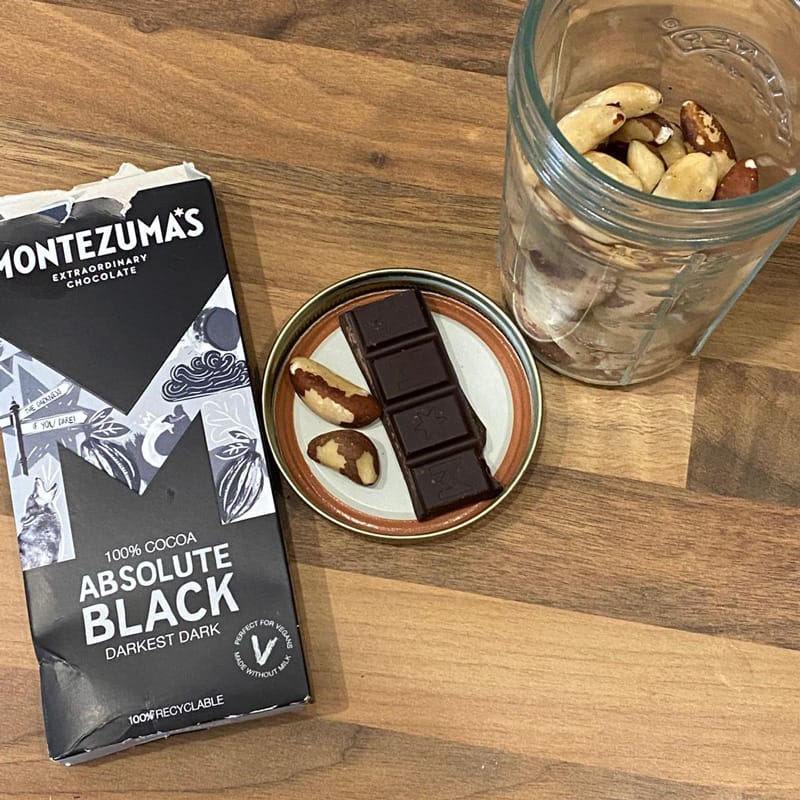
Dark chocolate & Brazil nuts
"What's good for snacking?" is a query I often see in online diabetes communities. If you're eating well, you probably won't feel the need to but here's a good option. I also have this as a lunch or breakfast if I'm not feeling hungry enough for a full meal. I often have a strip of this Montezuma's Absolute Black 100% dark chocolate or a cup of my cacao nib cocoa. I also add it to my natto and seeds, or yoghurt, nuts and berries meals. I've started trying to have at least two Brazil nuts a day as they are a good source of selenium (which I'm hoping might help with my thyroid problems) as well as including other important minerals from a mix of other nuts which I have regularly (mainly walnuts, hazelnuts and almonds). If you're not quite ready for 100% dark chocolate you can work your way through 70% to 85% and so on as you wean yourself off any sugar cravings. If you're not keen on the first dark chocolate you try please try a few more options as some taste much better than others. Once you get used to the idea that most branded chocolate in supermarkets is really just chocolate-flavoured sugar it becomes easier to adapt to the taste of real chocolate.
Sponsored*
Rizz
This is the world's first non-invasive glucose monitoring device and I can't wait to give it a try. I've been contemplating getting a health and fitness tracking ring for a while now as I'm interested in sleeping patterns, heart rate variability (HRV) and monitoring temperature for other health reasons. The Rizz ring claims to be able to estimate glucose trends using a combination of proprietary optical sensors, spectrometers and hybrid thermal signals. It's not claiming to be a medical-grade device for measuring insulin dosages (i.e. for type 1s) but I am interested to see if it will show me good enough readings to give me feedback on food choices and if I'm staying within my 'normal' 4-8 mmol/L blood glucose range. If it can do that the subscription costs for the app will be a lot cheaper than the £50-odd every two weeks for a CGM.
Norman Walsh
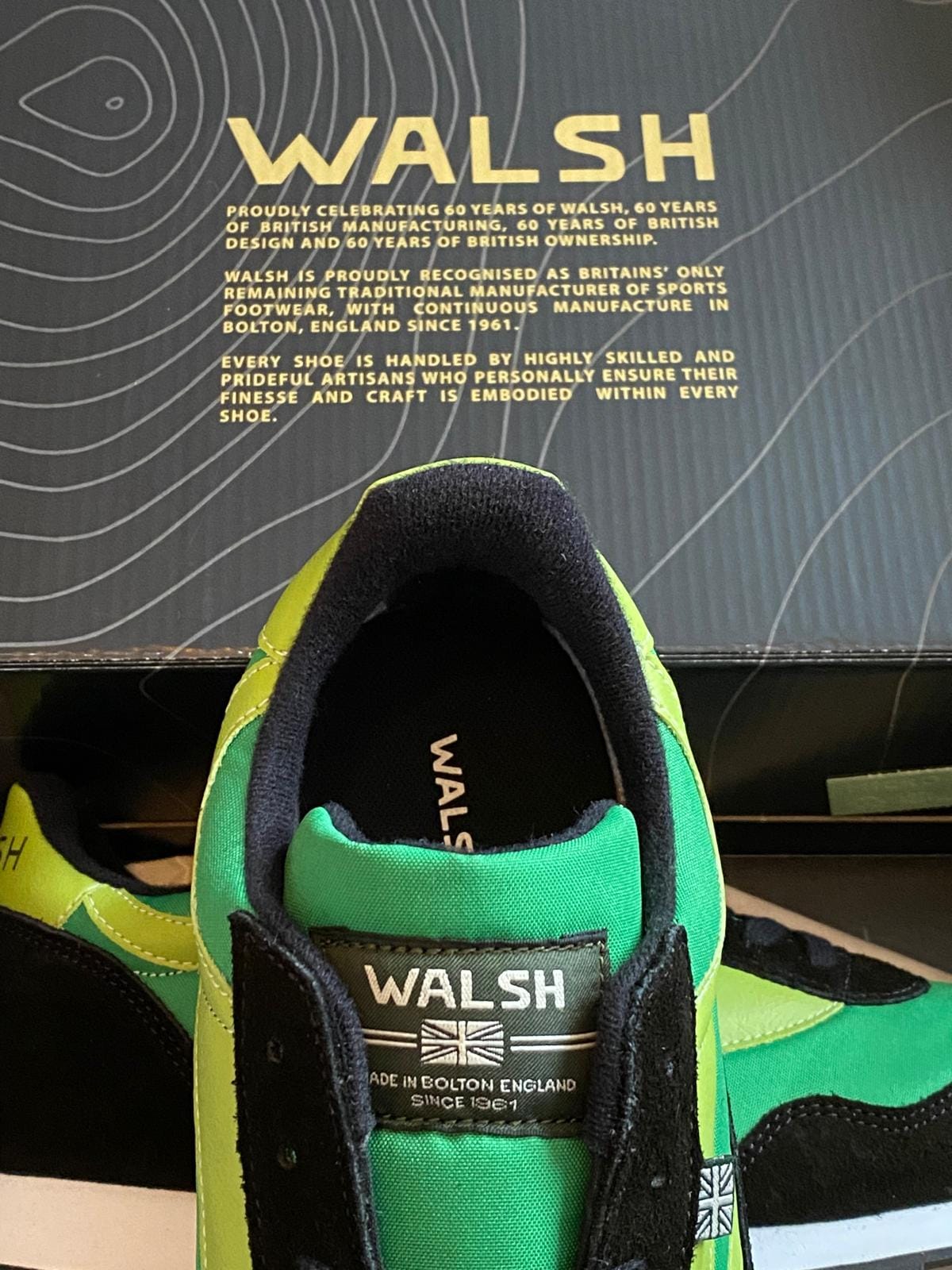
Did you know that Bolton has been making shoes for Olympic athletes for over 100 years? In 1961, Norman Walsh left J W Foster & Sons (the precursor of Reebok) to boldly establish his own brand. You can still buy performance footwear designed and made in Bolton from Walsh today.
Released in 1981 for harriers competing in the New York Marathon, the Ensign quickly became known for its durable performance and minimalist design. While many brands were experimenting with new technological materials, Norman Walsh stuck to his “less is more” approach. Featuring a Vibram Moreflex outsole with a thick wedge in the midsole for a cushioned heel strike, the Ensign provided both comfort and flexibility. The lightweight upper offered full-foot support, making it ideal for marathon training and races.